
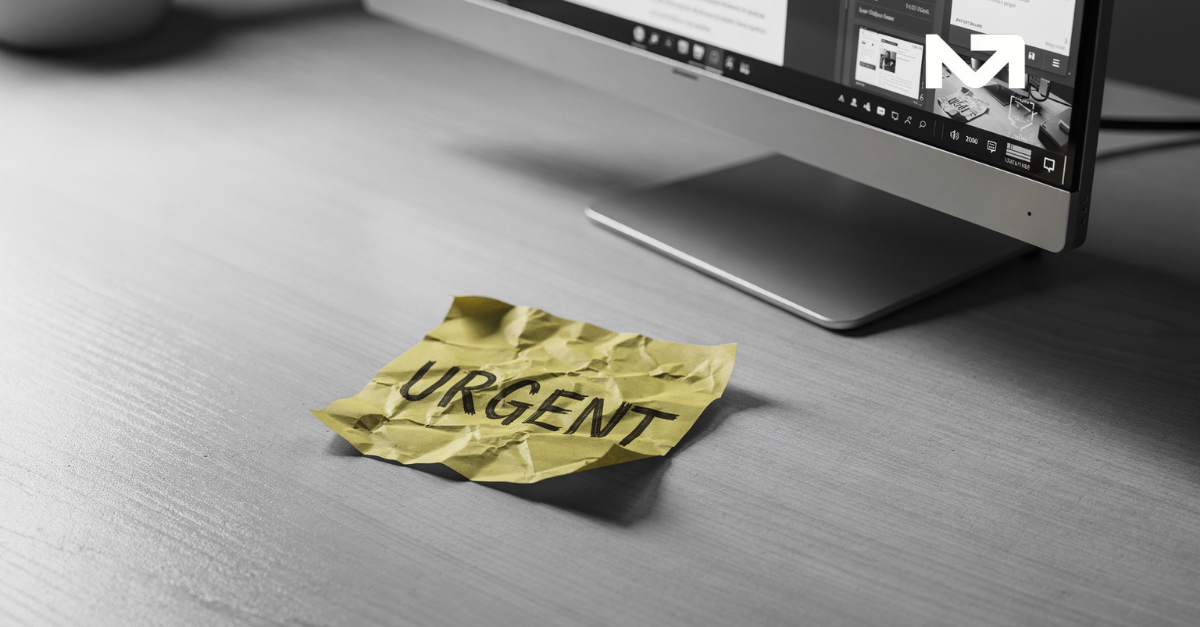
False Urgency at Work: The Hidden Cost of Always Being “Busy”
False urgency is one of the most expensive invisible habits in modern workplaces. When everything is treated as “ASAP,” teams shift from purposeful execution to constant reaction. Deadlines become arbitrary, interruptions become normal, and responsiveness starts to matter more than results. Over time, this culture fragments focus, weakens decision-making, and fuels chronic stress. False urgency may look like productivity, but it quietly taxes attention, energy, and sustainable performance.
Modern workplaces rarely suffer from a lack of effort.
They suffer from something far more subtle: a constant atmosphere of urgency.
- Everything is “ASAP.”
- Every request feels critical.
- Every delay feels dangerous.
Over time, urgency becomes the organisation’s default operating system.
This is not productivity. This is false urgency and it comes with a measurable human and business cost.
What Is False Urgency?
False urgency is the pressure to act immediately, even when speed is not truly required.
It often looks like:
- arbitrary deadlines (“end of day” with no real consequence)
- constant interruptions framed as emergencies
- escalation as a habit, not a necessity
- responsiveness being rewarded more than results
False urgency creates activity, but not always progress.
Harvard Business Review describes it as a cultural trap where speed becomes performative and busyness replaces effectiveness.
False Urgency Is Not About Workload , It’s About Anxiety
False urgency is rarely caused by the task itself. It is often driven by emotion:
- discomfort with uncertainty
- fear of missing out
- fear of blame
- lack of clarity
- leadership stress transferring downward
Urgency activates the brain’s threat response: act now → regain control → reduce discomfort
Teams end up operating in a chronic fight-or-flight state, even when no true emergency exists.
The Cost of False Urgency:
1. Focus and cognitive performance collapse
Urgency fragments attention.
Research on multitasking shows that constant task-switching carries measurable cognitive costs and reduces performance.
Gloria Mark’s interruption research at UC Irvine found that interruptions increase stress and perceived time pressure, even when people work faster to compensate.
False urgency is neurologically expensive.
2. Decision-making quality declines
Urgency compresses thinking. Under pressure, teams default to:
- familiar solutions
- quick fixes
- shallow judgment
Critical thinking requires space and urgency removes it.
Harvard Business highlights urgency as one of the biggest traps preventing reflective decision-making.
3. Burnout becomes structural
False urgency generates chronic workplace stress.
The World Health Organization defines burnout as a syndrome resulting from chronic workplace stress that has not been successfully managed.
When urgency becomes constant, recovery disappears.
4. “Always-on” culture becomes normalised
False urgency spreads into evenings and weekends. After-hours email responsiveness is linked to higher burnout and workplace tension. Availability becomes the new performance metric.
False Urgency Is a Leadership Design Problem
False urgency is not a time-management issue. It is an organisational operating-system issue.
It signals:
- unclear priorities
- weak planning
- poor decision rights
- firefighting being rewarded
- stress being mistaken for commitment
High-performing organisations don’t eliminate urgency.
They govern it.
Closing Thought
False urgency is a silent tax.
It taxes: attention, judgment, health, morale, long-term performance
The strongest teams do not run on panic.
They run on clarity.
References
Harvard Business Review — 5 Tactics to Combat a Culture of False Urgency at Work (2023)
World Health Organization — Burn-out an Occupational Phenomenon (ICD-11) (2019)
American Psychological Association — Multitasking and Switching Costs
Mark, G. et al. — The Cost of Interrupted Work: More Speed and Stress (CHI 2008)
Harvard Business — Don’t Fall into the Urgency Trap
PsyPost — After-hours Work Emails Fuel Burnout